Web AppLive product
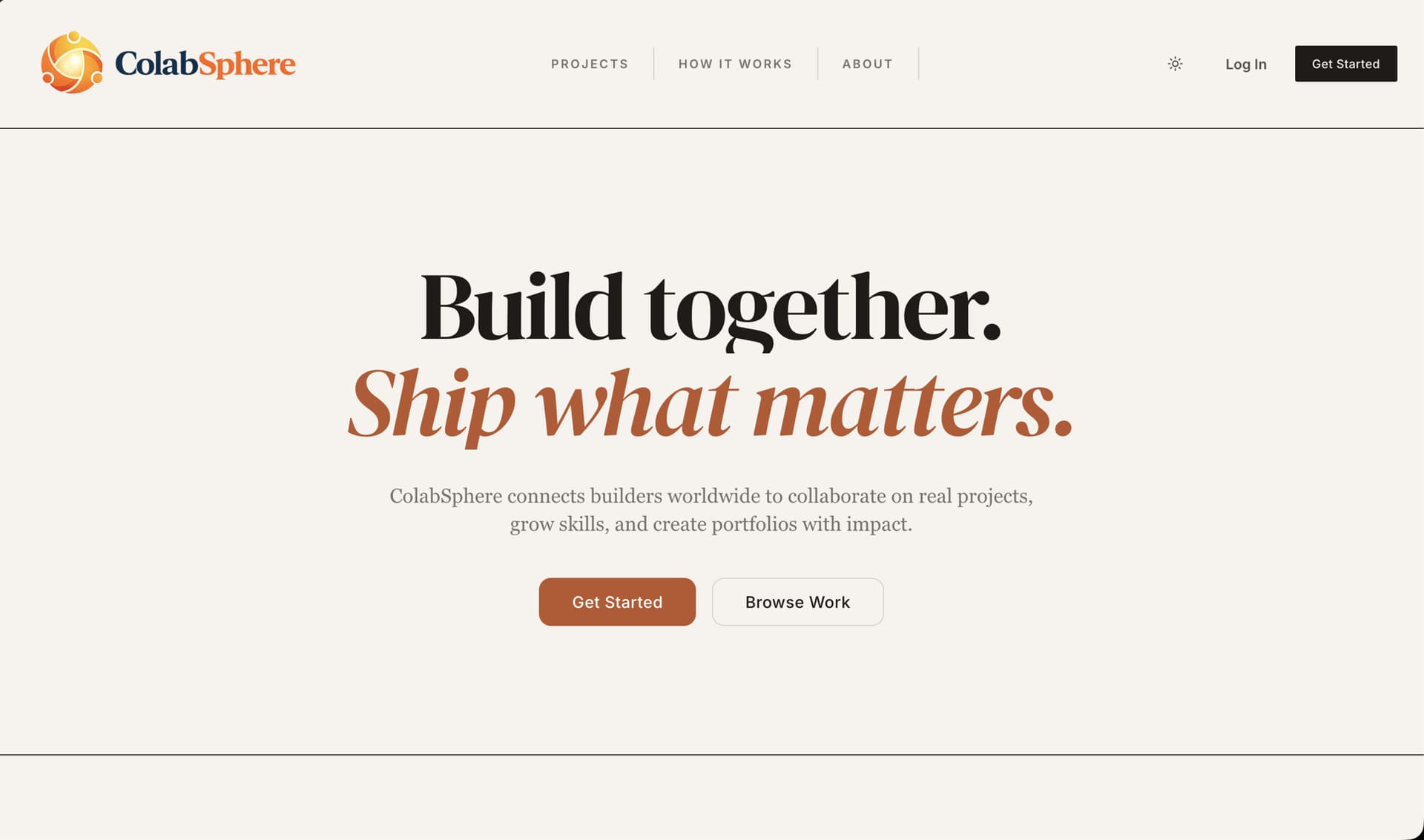
A platform where developers create, discover, and join collaborative projects based on matching skill sets. Real-time in-project chat via WebSockets; deployed on Google Cloud Platform.
AI dashboard that turns telco data into retention decisions.
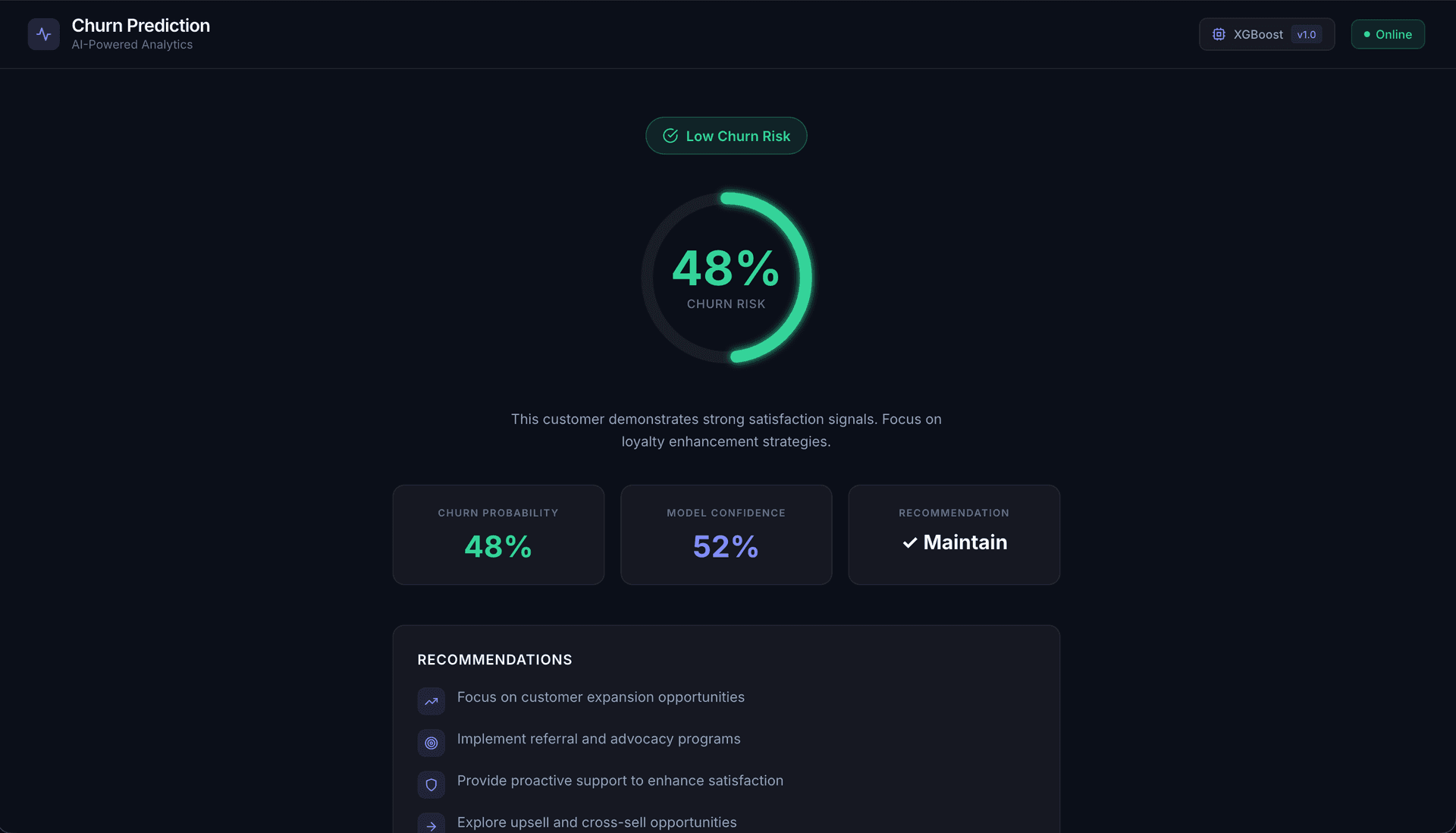
This project is a full-stack AI product for predicting customer churn. A Flask API serves a calibrated XGBoost pipeline; a React + Tailwind dashboard walks operators through a multi-step customer profile wizard and returns probability, confidence, and risk verdicts.
Training is production-oriented: OneHot preprocessing, stratified CV hyperparameter search, isotonic probability calibration, and threshold optimization aimed at maximizing recall under a precision floor (business-aligned objective, not vanity accuracy).
Benchmarking across model families selected XGBoost as the winner, with optimized metrics around ~0.66 recall, ~0.60 precision, and ROC-AUC ~0.84 — packaged as deployable model artifacts with a documented report.
A platform where developers create, discover, and join collaborative projects based on matching skill sets. Real-time in-project chat via WebSockets; deployed on Google Cloud Platform.
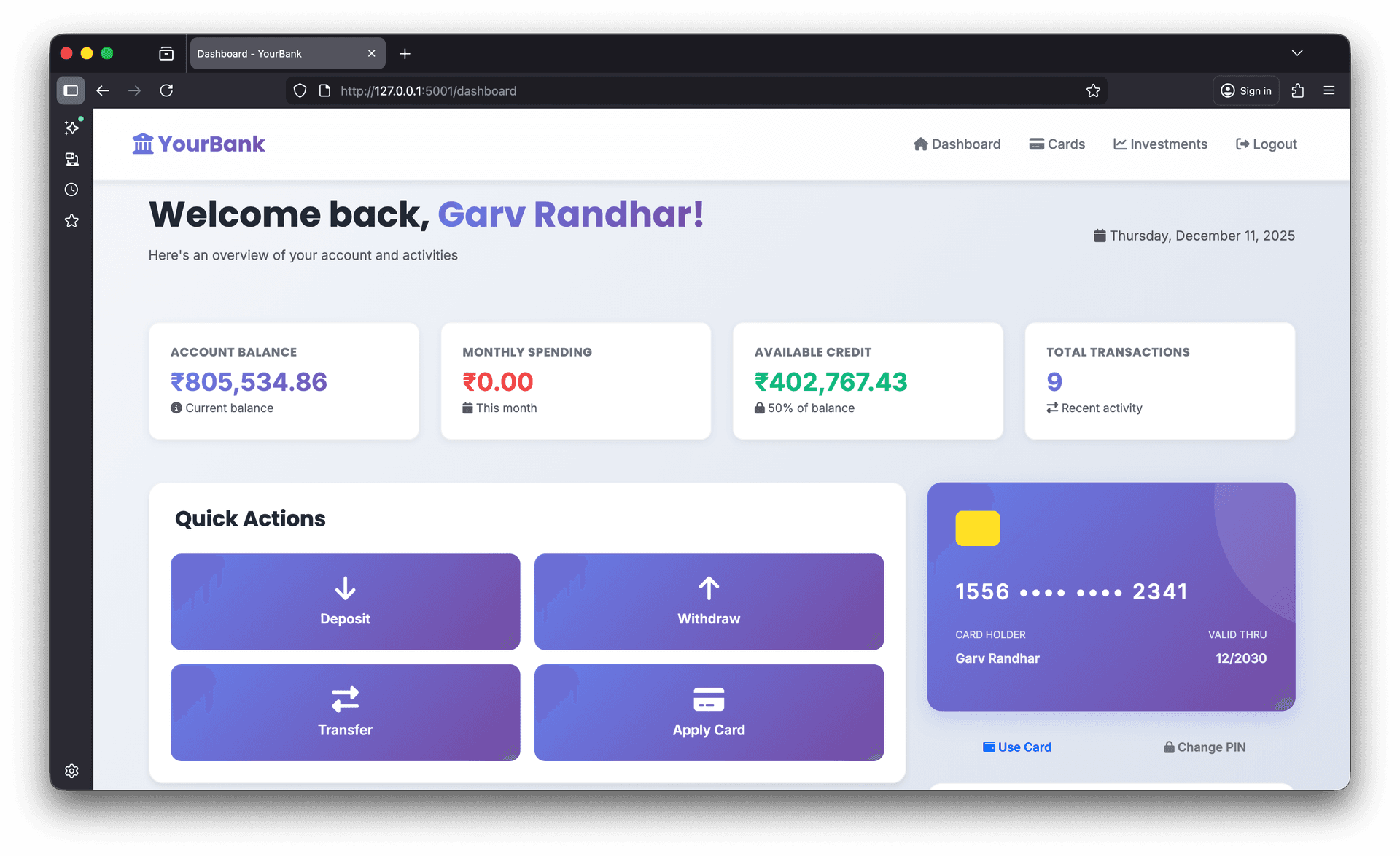
Full-featured online banking with savings/current accounts, loans, credit cards, investments, bulk payments, 2FA, and automated EMI processing.